
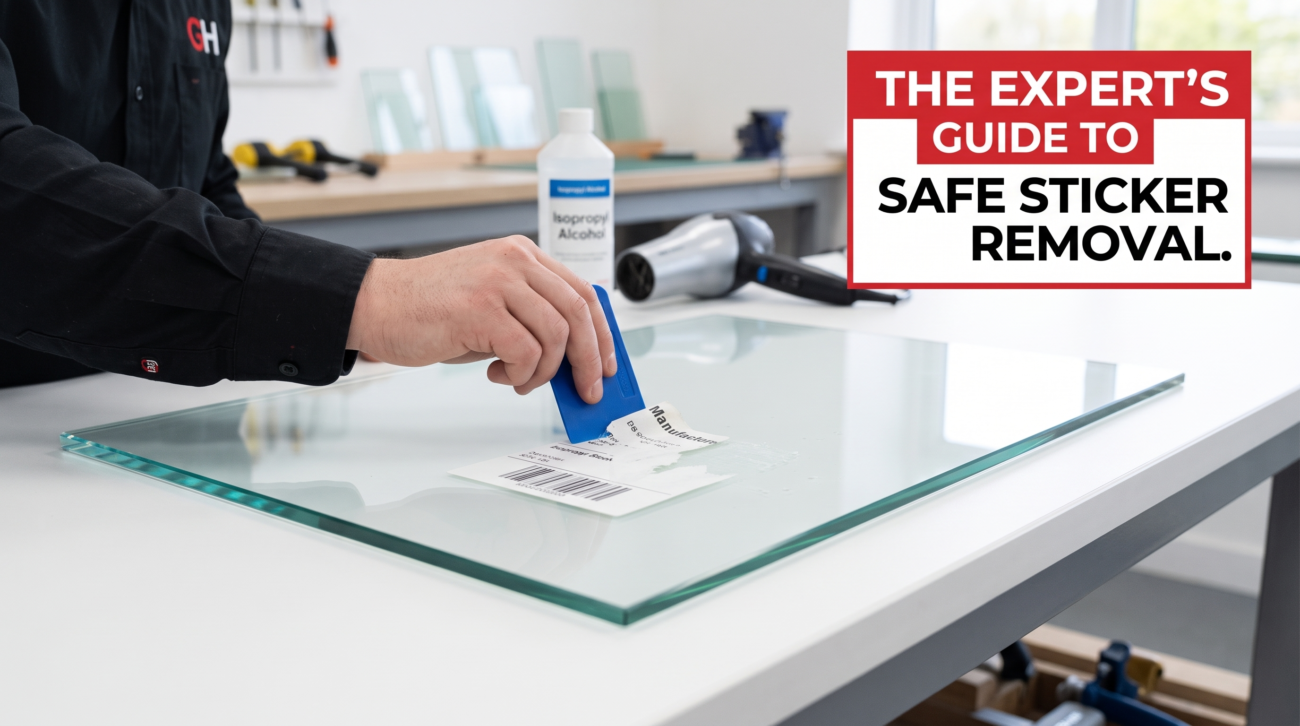
Taking delivery of a new bespoke glass panel is exciting. But a stubborn manufacturer label or shipping tape can stand between you and a flawless finish. Here is the zero-fluff, expert-approved method to remove adhesive without damaging your investment.
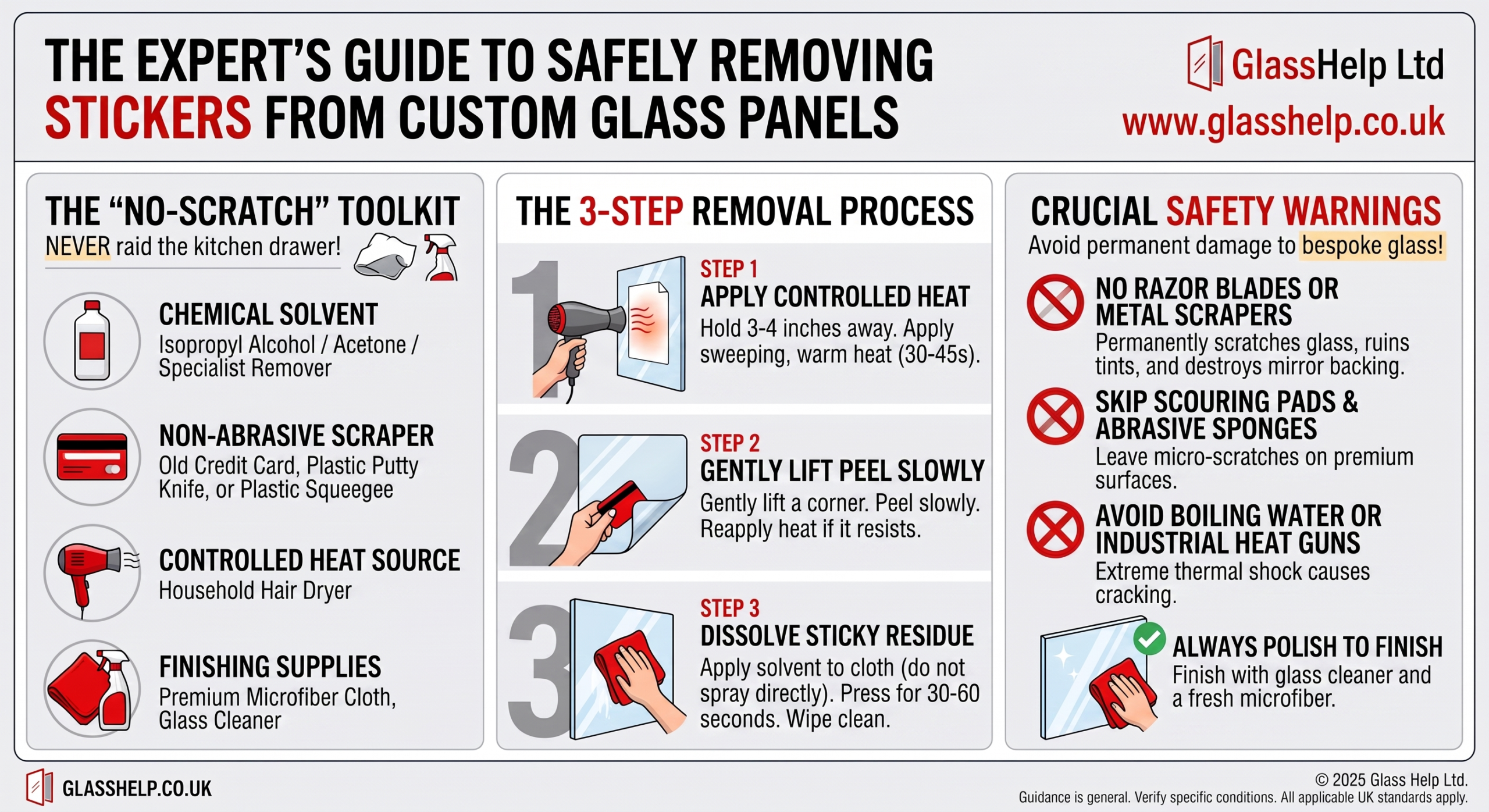
The “No-Scratch” Toolkit
Before you begin, step away from the kitchen drawer. Using a knife or sharp metal object is the fastest way to ruin a custom glass piece. Gather these four safe essentials instead:
1. Chemical Solvent
Isopropyl alcohol, acetone, or dedicated adhesive remover.
2. Plastic Scraper
An old credit card, plastic squeegee, or putty knife.
3. Heat Source
Standard household hair dryer on a warm setting.
4. Finishing Supplies
Clean microfiber cloth and high-quality glass cleaner.
The 3-Step Removal Process
When dealing with premium custom cuts—whether it is a heavy-duty architectural mirror or a beautiful racetrack-shaped table top with a sweeping 740mm radius curve—protecting the surface is your absolute top priority.
Because large panels cannot be easily soaked in a kitchen sink, you must use a targeted approach.
Step 1: Apply Controlled Heat
Hold a standard hair dryer 3 to 4 inches away from the sticker on a warm setting. Sweep it back and forth continuously for 30 to 45 seconds. This safely softens the glue without thermally stressing the panel.
Step 2: Lift and Peel Slowly
Once the sticker is warm, use your plastic scraper or an old credit card to gently lift one corner. Peel the label back slowly at a 45-degree angle. If the paper begins to tear or the adhesive resists, do not force it. Stop immediately and apply another 20 seconds of warm heat before trying again.
Step 3: Dissolve the Sticky Residue
Never spray harsh chemical liquids directly onto a large standing panel. Instead, apply your solvent directly to a microfiber cloth. Press the damp cloth against any leftover sticky residue for 30 to 60 seconds to break down the chemical bonds. Wipe away and finish by polishing the area with standard glass cleaner.
Danger Zone: Crucial Avoid List
- No Razor Blades: A single slip with a metal blade will permanently scratch bespoke glass surfaces, ruin expensive tinted panels, and destroy the silvered backing of mirrors.
- No Scouring Pads: The rough texture of kitchen scouring pads will leave a permanent, cloudy matrix of micro-scratches on the glass surface.
- No Extreme Heat: Never use a heavy-duty industrial heat gun or boiling water. Rapid temperature changes can cause thermal shock, which will crack the panel entirely.
Beyond Maintenance: Specifying the Right Glass
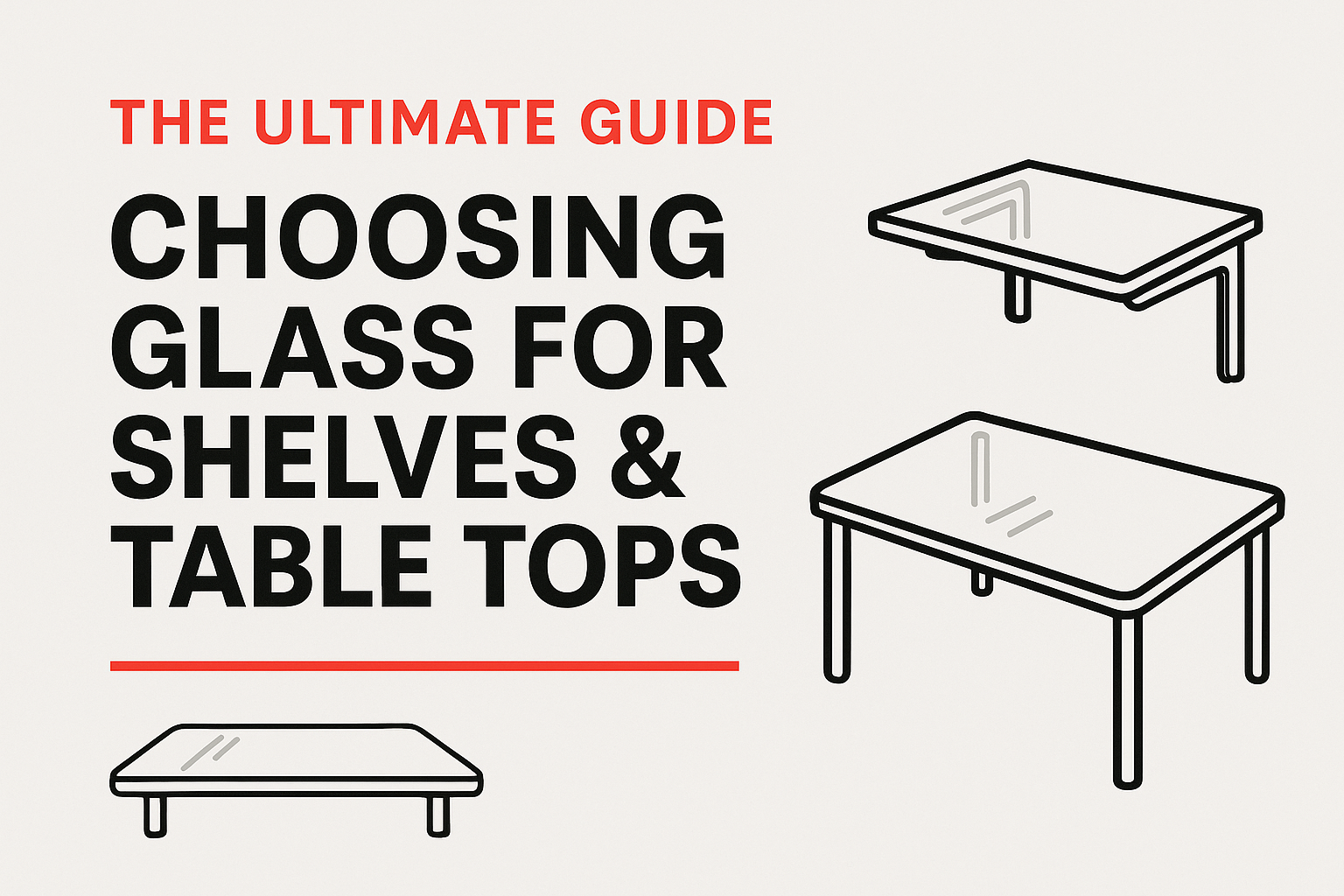
Keeping your glass clean is only half the battle; starting with the right specification ensures longevity. In the UK, most domestic glass shelves use 6–10 mm toughened glass, while dining or coffee tables usually require 8–12 mm to properly balance weight capacity and aesthetics.
Furthermore, it is vital to ensure your glass complies with the BS EN 12150 standards for thermally toughened safety glass, which dictates strict performance criteria for impact resistance to ensure the glass remains safe in your home or business.
Keep Your Custom Glass Flawless
Removing stickers safely is all about patience and using the right chemistry instead of brute force. By following the gentle heat and solvent method, your architectural glass and bespoke mirrors will remain pristine and perfectly clear for years to come.
Ready to upgrade your space? Explore our range of custom-cut glass tailored specifically to your dimensions, delivered directly across the UK.
© 2026 Glass Help Ltd — Written by Masood. Guidance is general. Always verify thickness, make-up, and installation against your specific conditions and applicable UK standards.

Leave a comment